



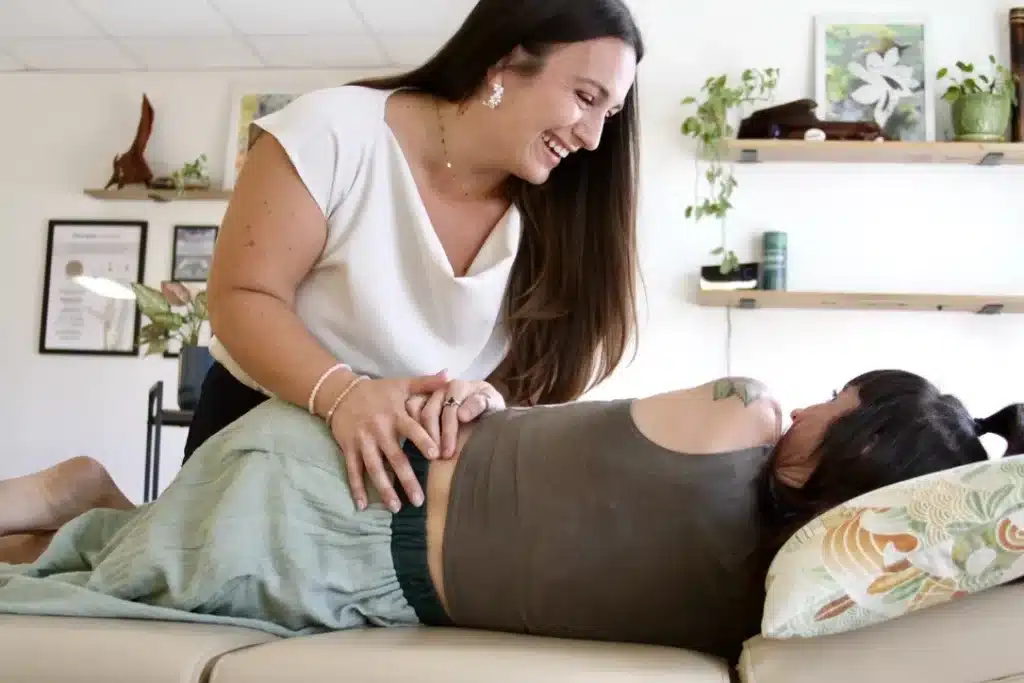
lower back chronic pain can affect everything from your daily routine to your ability to exercise, work, and enjoy life. When discomfort persists for three months or longer, it may be associated with changes in the spinal discs, joints, muscles, or surrounding nerves. In many cases, several factors contribute to ongoing pain rather than one isolated injury.
At More Life Chiropractic, we take an individualized approach to evaluating lower back pain. By assessing spinal movements, posture, imaging, and other contributing factors, we work to better understand your symptoms and develop a care plan tailored to your long term goals.
What is chronic lower back pain?
Chronic lower back pain is discomfort in the lumbar region of the spine that persists for 12 weeks or longer. The lumbar spine supports much of your body’s weight while allowing you to bend, twist, lift, and move throughout the day.
Because this region experiences repeated loading and movement, it can be affected by a variety of factors, including muscle strain, joint irritation, disc- related conditions, and age- related changes.
Chronic lower back pain can develop after an injury, gradually over time, or without an obvious triggering event. Symptoms may range from a dull, persistent ache to sharp pain that limits movement. Some people also experience stiffness, muscle tension, or pain that travels into the buttocks or legs.
How does chronic lower back pain differ from acute pain?
Acute back pain often resolves within a few days or weeks. Chronic pain lasts longer than three months and requires a different approach.
| Pain Type | Duration | |
| Acute | Days to weeks | |
| Chronic | More than 3 months |
Why does the lower back chronic pain become a problem area?
The lumbar spine bears significant weight and stress during daily movement. That constant load makes the region prone to wear, tear, and injury over time. For many people, the pain goes away quickly. For others, the discomfort lingers and becomes chronic.
Chronic pain signals that something deeper is at play. An awkward movement or a fall can trigger pain, but those events are not usually the root cause. Most chronic pain, especially in the lower back, stems from underlying conditions that need identification and targeted care.
What are the main anatomical causes of Lower Back Chronic Pain?
Chronic lower back pain can develop from several structures within and around the lumbar spine, including the spinal discs, facet joints, muscles, and surrounding nerves. Common contributing factors include degenerative changes, joint irritation, disc injuries, and changes in muscular strength or mobility.
Sometimes pain begins after a specific event, such as lifting something heavy or making an awkward movement. In other cases, symptoms develop gradually without a clear cause. Often, more than one factor contributes to ongoing discomfort.
At More Life Chiropractic, understanding how these structures function together helps guide an individualized approach to your lower back pain.
How does spinal arthritis contribute to Lower Back Chronic Pain?
Spinal arthritis involves inflammation of the facet joints. These small joints connect the vertebrae and guide spinal movement. When inflamed, they produce persistent stiffness and pain in the lumbar region. The discomfort can linger for months, making everyday bending and twisting difficult.
What role does age-related wear and tear play?
Over time, the spinal discs and joints naturally undergo changes. These changes are a normal part of aging, although their extent varies from person to person.
It is important to remember that age-related charges do not automatically mean your spine is damaged or that pain is inevitable. Your symptoms, physical function, and overall health are just as important as what appears on an imaging study.
The anatomical picture varies from person to person. Some individuals experience primarily joint-related pain. Others deal with disc degeneration as the dominant factor. Many face a combination of these issues simultaneously.
Key anatomical causes include:
- Spinal arthritis: inflammation of the facet joints
- Injuries: past trauma that leaves lasting structural changes
- Age-related wear and tear: disc desiccation and bone spur formation
Understanding the specific anatomical source for lower back chronic pain matters. It guides how a clinician approaches treatment and helps set realistic expectations for recovery.
How do lifestyle factors contribute?
Lifestyle factors such as smoking, obesity, and poor posture increase the risk of developing chronic lower back pain. These daily habits place cumulative stress on the lumbar spine, often accelerating damage that leads to persistent discomfort.
How does excess body weight affect the lower back?
Excess body weight adds mechanical stress to the lumbar spine. This extra load accelerates wear and tear on spinal discs and joints. Over time, the constant pressure can trigger chronic pain that does not resolve on its own.
Why does smoking harm spinal health?
Smoking reduces blood flow to the spinal discs. Without adequate circulation, the discs cannot receive nutrients or heal properly. This impaired recovery process makes the spine more vulnerable to degeneration and chronic pain.
What role does poor posture play?
Improper body mechanics and prolonged sitting strain the lower back muscles and ligaments. Poor ergonomics at a desk or during daily activities creates repetitive stress on spinal structures. The result is persistent discomfort that worsens without correction.
- Smoking restricts blood supply to discs, blocking nutrient delivery and healing
- Obesity overloads the lumbar spine, accelerating disc and joint deterioration
- Poor posture and improper body mechanics strain muscles and ligaments repeatedly
These three factors often work together. A person who sits for long hours, carries excess weight, and smokes faces a compounded risk. Addressing each lifestyle factor reduces the mechanical and biological stress driving lower back chronic pain causes. Small changes in daily habits can slow or prevent the progression from acute episodes to long-term spinal issues.
What role do spinal discs play?
Spinal discs act as shock absorbers between the vertebrae, cushioning the spine during movement. When these discs degenerate or herniate, they become a common source of lower back chronic pain causes that persists for months.
Each disc features a tough outer layer and a soft, gel-like inner core. A herniated disc occurs when that soft inner material pushes through a tear in the outer layer. The protruding material can irritate nearby nerves, triggering pain that radiates through the lower back and sometimes into the legs.
How does disc degeneration happen?
Disc degeneration is a natural part of aging. The process accelerates with repetitive strain, direct injury, or poor biomechanics over time. Johns Hopkins rehabilitation physician Akhil Chhatre, M.D., notes that common causes include arthritis of the spine, injuries, and age-related wear and tear.
Why does disc height matter?
Healthy discs maintain proper spacing between vertebrae. As discs lose height and hydration, that space narrows significantly. Narrowed spacing leads to nerve compression, which produces chronic pain and stiffness.
The cascade often follows a predictable pattern:
- Discs lose water content and elasticity
- Vertebral spacing narrows
- Nerves become compressed or irritated
- Pain becomes persistent and difficult to ignore
Age-related wear and tear affects nearly everyone eventually. The key distinction lies in how the body responds. Some people experience minor discomfort, while others develop debilitating chronic pain that limits daily activity. Understanding the disc’s role helps patients recognize why lower back pain persists even after the initial injury heals.
How is the root cause diagnosed?
Diagnosing the root cause of lower back chronic pain causes requires a systematic process that goes beyond treating symptoms. More Life Chiropractic uses advanced diagnostic technology combined with hands-on, evidence-informed techniques to uncover the underlying source of discomfort. This approach ensures the care plan targets the actual problem rather than providing temporary relief.
A thorough history and physical examination form the foundation of the diagnostic process. The clinician asks about the onset of pain, daily activities, and any prior injuries. The physical exam tests range of motion, muscle strength, and joint stability. These steps help differentiate between mechanical issues, degenerative changes, and inflammatory sources of pain.
What role do imaging studies play?
Imaging studies such as X-ray or MRI provide a detailed look at the spine’s structure. These images can reveal disc herniation, arthritis, or spinal stenosis. The visual evidence confirms or rules out specific structural abnormalities that physical exams cannot detect. This information guides the clinician toward the most appropriate treatment path.
How does non-invasive care address the findings?
Non-invasive chiropractic care directly targets the biomechanical dysfunction identified during diagnosis. The care plan focuses on restoring proper joint motion and muscle balance. This approach aids individuals suffering from chronic issues by addressing the root cause rather than masking pain with medication. The goal is long-term improvement in function and comfort.
| Diagnostic Step | Purpose | Example Finding |
| History & physical exam | Identify pain patterns and mechanical limits | Restricted hip rotation contributing to lumbar strain |
| Imaging (X-ray, MRI) | Visualize structural abnormalities | Herniated disc at L4-L5 |
| Biomechanical assessment | Determine movement dysfunction | Weak core stabilizers causing pelvic instability |
Frequently Asked Questions
What are the structural causes of lumbar pain that lead to chronic symptoms?
Structural causes of lumbar pain include problems with the anatomy of the spine itself rather than isolated muscle strain. The article identifies spinal arthritis, which inflames the facet joints that connect the vertebrae; age-related wear and tear, including disc desiccation and bone spur formation; and disc degeneration or herniation, where the shock-absorbing discs between vertebrae lose integrity. These structural changes narrow the spaces nerves travel through, compress surrounding tissue, and create the kind of persistent mechanical dysfunction that distinguishes chronic lower back pain causes from a short-lived muscle strain that resolves within days or weeks.
What is degenerative disc disease and how does it cause chronic lower back pain?
Degenerative disc disease describes the natural, gradual breakdown of the spinal discs that cushion the vertebrae in the lumbar spine. As the article explains, discs lose water content and elasticity over time through a process called disc desiccation, which reduces their height and cushioning ability. Narrowed disc spacing compresses nearby nerves and destabilizes the joints above and below each disc. Repetitive strain, prior injury, and poor biomechanics accelerate this process. The result is the kind of persistent stiffness and nerve-related pain that defines degenerative disc disease in the lumbar spine.
Can a herniated disc cause sciatica-like pain in the legs?
Yes. A herniated disc occurs when the soft, gel-like core of a spinal disc pushes through a tear in its tougher outer layer. That protruding material can press against or irritate nearby spinal nerves. According to the article, this irritation triggers pain that radiates through the lower back and sometimes into the legs, the pattern commonly associated with sciatica. Because the nerve compression stems from a structural problem rather than a temporary strain, the resulting leg pain tends to persist until the underlying disc issue, not just the symptom, is identified and addressed.
What is spinal stenosis and how does it relate to chronic lower back pain?
Spinal stenosis refers to a narrowing of the spaces within the spine that can press on the nerves traveling through the lumbar region. The article notes that imaging studies such as X-ray or MRI are used specifically to reveal conditions like spinal stenosis alongside disc herniation and arthritis. This narrowing often develops alongside the bone spur formation and disc height loss described in the age-related wear and tear discussion, since both changes reduce the space available for nerve roots. Identifying spinal stenosis through imaging helps clinicians confirm nerve compression as a true structural cause of chronic pain.
How does a chiropractor diagnose the root cause of chronic lower back pain?
Diagnosing the root cause starts with a thorough history and physical examination that reviews the onset of pain, daily activities, and prior injuries, along with tests of range of motion, muscle strength, and joint stability. Imaging studies such as X-ray or MRI then visualize structural abnormalities like disc herniation or spinal stenosis. A biomechanical assessment rounds out the process by identifying movement dysfunction, such as weak core stabilizers contributing to pelvic instability. Combining these three steps allows a clinician to confirm the actual mechanical or degenerative source of pain rather than simply treating surface symptoms.
Can chronic lower back pain improve without surgery?
Yes, in many cases. The article explains that non-invasive chiropractic care targets the biomechanical dysfunction identified during diagnosis by restoring proper joint motion and muscle balance, rather than masking pain with medication. This approach addresses the structural and functional issues, such as joint dysfunction, muscle imbalance, or mechanical dysfunction, that drive chronic discomfort. Because treatment focuses on the actual root cause rather than temporary symptom relief, many individuals experience lasting improvement in function and comfort through conservative, hands-on care alone, without resorting to surgical intervention.
Conclusion
In closing, chronic lower back pain stems from multiple interconnected causes, structural degeneration, lifestyle habits, and biomechanical dysfunction working together to create persistent discomfort. Identifying the specific root cause through thorough diagnosis transforms how treatment unfolds, shifting focus from temporary symptom relief to lasting functional improvement. By addressing the underlying problem rather than masking pain, you reclaim the freedom to move, work, and live fully without limits. Your path to recovery begins with understanding what drives your pain and committing to care that restores genuine wellness.